The Framework
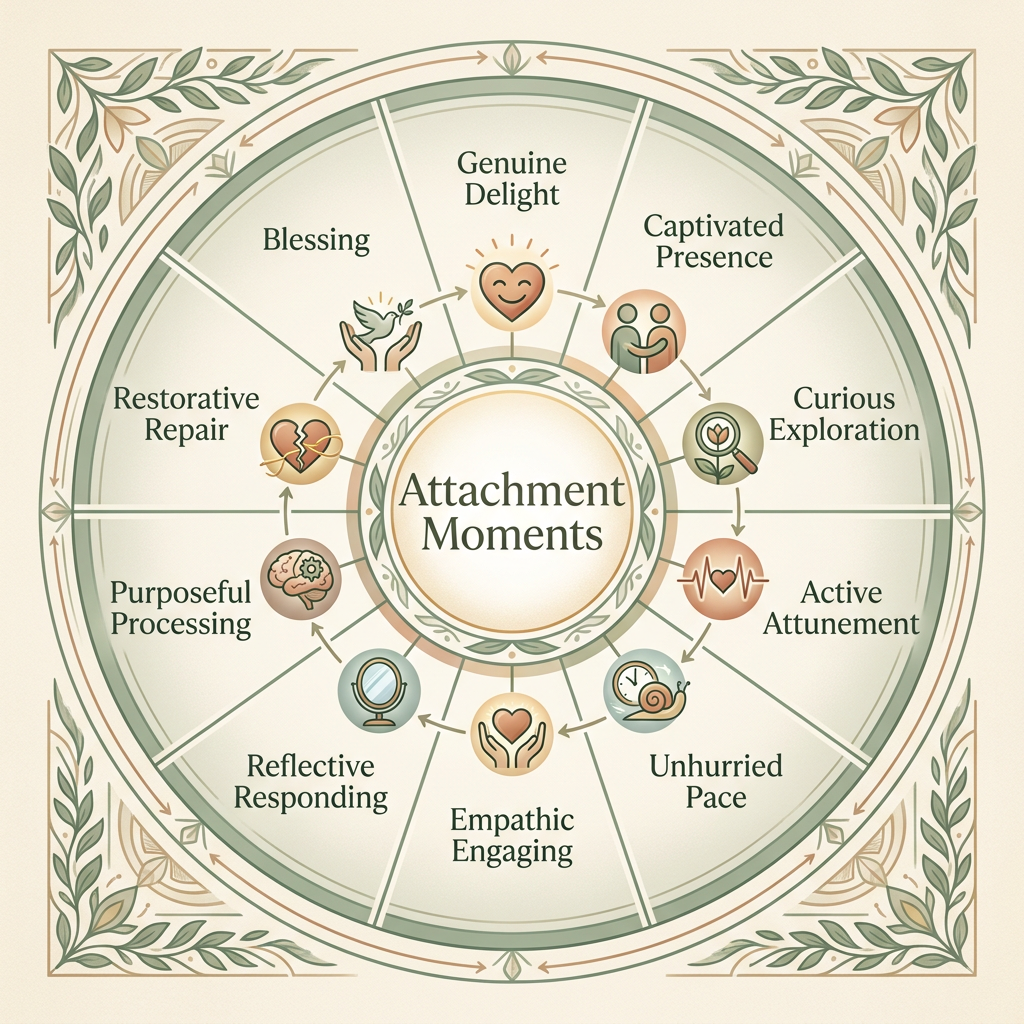
Attachment Moments™
Secure attachment is not a personality trait. It is not something you either have or you don't. It is something that is built—moment by moment, interaction by interaction—through the quality of the relational experiences we give and receive.
We call these experiences Attachment Moments™. They are the building blocks of trust, safety, and emotional closeness in every relationship.
What Attachment Moments™ Are
Attachment Moments™ are the small, repeated relational experiences that shape how safe, seen, and valued we feel in our closest relationships.
They are not grand gestures, date nights, or vacations (though those can contain attachment moments). They are the look on your face when someone walks in. The way you listen. Whether you come back after a fight.
Research shows that secure attachment is built through thousands of these small interactions over time. Not perfection—but consistent, good-enough responsiveness and the willingness to repair when things go wrong.
What They Are NOT
- ×A checklist to complete or a formula to follow
- ×A way to measure who is doing more in the relationship
- ×Something you do perfectly or not at all
- ×A replacement for therapy or professional help
- ×A way to fix, control, or change another person
The 10 Qualities
Each quality represents a specific way of showing up in a relationship that contributes to secure attachment. Together, they form a complete picture of what emotionally safe connection looks like in practice.
The Other Side
Learning to Receive Attachment Moments™
Most of the conversation about attachment focuses on what we give. But for many people, the harder part is what they allow themselves to receive.
Being truly loved—being seen, wanted, pursued, forgiven—can feel terrifying for those who were taught early that love is conditional, dangerous, or too good to trust.
Learning to receive Attachment Moments™ is its own kind of courage.
The Terror of Being Seen—or Not Being Seen
For many people, being truly seen feels more dangerous than being ignored. If someone sees the real you and stays—that changes everything. But the risk of being seen and rejected is one of the deepest human fears.
Letting Down Defenses
Walls were built for a reason. Letting them down is not weakness—it is one of the bravest things a person can do. Receiving attachment requires lowering the guard long enough for someone to reach you.
Releasing Shame
Shame tells us we are fundamentally flawed, unworthy of love, too broken for connection. Releasing shame is not about believing we are perfect. It is about believing we are worthy of showing up as we are.
Admitting Need
Many of us were taught that needing people is weakness. But attachment is built on the willingness to need and be needed. Admitting need is an act of relational courage.
Allowing Co-Regulation
Co-regulation is the experience of letting another person's calm, safe presence settle your own nervous system. It cannot be forced. It can only be allowed—and that requires trust.
Embracing Hard-to-See Truths
Sometimes the truth that someone offers us about ourselves or our relationships is painful but necessary. Receiving attachment means being willing to hear what we need to hear—not just what we want to hear.
Where to Practice
Attachment Moments™ are not limited to romantic relationships. They can be practiced in every relationship that matters.
In Marriage
Practice repair after conflict. Offer delight when your partner walks through the door. Slow down enough to actually ask how they are—and wait for the real answer.
In Parenting
Let your child see your face light up when they enter the room. Be curious about their inner world. When you mess up, go back and repair. This is what builds secure attachment in children.
In Friendship
Show up with captivated presence. Reflect back what you hear. Be willing to sit in discomfort rather than rushing to fix. Friendship deepens when attachment moments are practiced.
In Faith Communities
Churches, small groups, and faith communities can become laboratories for practicing these moments. Imagine a community where repair is normal, delight is abundant, and shame has no place.
In Therapy
The therapy room is one of the most powerful places to experience and practice attachment moments. A skilled therapist creates the conditions for every one of these qualities.
Start Practicing
You do not need to master all ten qualities at once. Start with one. Notice where it shows up—and where it is missing. That awareness is already the beginning.